

With over three decades in health and care, Ciara Moore has seen the NHS evolve through waves of financial, cultural, and digital transformation. Now running her own consultancy in Cambridge, she advises NHS organisations on optimising their technology to improve staff experience and drive better patient outcomes.
Growing Up with Technology
Ciara grew up “in the NHS,” but her curiosity about technology started early. “I’m Gen X, and I remember when my dad bought our first fax machine, that was the moment I got hooked,” she recalls.
Though now a recognised digital leader, Ciara’s early career started in finance. Her first real encounter with transformation came during an Oracle Financials implementation, where she discovered the power of systems thinking from a user’s perspective.
A small, practical moment stuck with her at Northwick Park Hospital; automating car park cash collection instantly improved staff days. “It was such a small thing, but it made the day easier. Since then, that’s for me the root of digital optimisation.”
Lessons from a Career in NHS Technology
Having led multiple large-scale digital and transformational programmes, Ciara learnt that success isn’t measured by how advanced the technology is, but by how people feel about using it. “You can have the best solution in the world, but if people don’t understand how, it will improve their lives, it won’t stick. Transformation is about culture, trust, and helping people see the benefits for themselves. The ‘what’s in it for me?’”
Meaningful change, she adds, often takes longer than project plans allow. “You need perseverance, patience, and empathy so people can build trust and see how change really affects them. Once adoption becomes second nature and people realise what’s possible, that’s when the real transformation happens.”
Being a Woman in Tech
Ciara credits her early confidence in technology to her education.
“I went to an all-girls school that was really innovative. We were one of the first to get computers. No one ever told us tech wasn’t for us.”
That foundation helped her navigate the early years of a career where digital and data roles were largely male dominated. “I was often the only woman in the room,” she admits. “But that’s changed enormously. Now, I see women leading digital programmes, technical teams, and entire end to end EPR implementations and that’s brilliant to see.”
Projects That Made a Difference
Looking back, Ciara’s proudest achievements are those where technology delivered real human impact. At Addenbrooke’s Hospital, she has watched a decade-long journey of digital transformation unfold. “To look back ten years later and see how their EPR system has matured is amazing,” she says.
She’s also proud of her work across Mid and South Essex during the pandemic, where her programme team supported the rapid deployment of remote monitoring and wearable technology to support patients at home. “It showed what happens when you combine urgency, teamwork, and the right tools. We had the tech in people’s homes within weeks and it made a real difference.”
For Ciara, projects like these reinforce the privilege and responsibility of working in health tech. “You’re not just delivering software or an EPR deployment, you’re shaping how care is delivered. That’s a huge responsibility and an incredible opportunity.”
Bridging the Gap Between Clinicians and Technology
Over the years, Ciara has seen the gap between clinicians and technicians narrow but not disappear. “Technicians are always pushing forward; clinicians are focused on patient safety. Change happens when you can translate between those worlds”
Successful transformation rests on three pillars: technology, people, and process – with people and change management often making the biggest difference. “You need translators, people who can explain what the technicians are trying to achieve in a way clinicians relate to.”
Strong people and change management are essential even on a small scale. “We’re getting better at bringing more clinicians into technology,” she notes. “They’re becoming more curious, more engaged, and that’s a huge step forward.”
The Future of Healthcare Technology
Looking ahead, Ciara is realistic about the pace of digital change within the NHS. “We’ve got a solid ten-year plan, but progress will be slower than we’d like because of financial pressures,” she says. “That said, technology is still the answer to most of our challenges; we just have to keep making the case for investment.”
She sees the biggest gains coming from care-at-home technologies – wearables, sensors, and data platforms supporting independent living. “We have an ageing population and fewer care homes, so the home has to become part of the health system. And it’s a myth that older people can’t use tech… they’re banking online and booking flights like everyone else. The real issue in engaging patients in technology are for people in areas of demographic deprivation.”
Misconceptions and Lessons Learned
Ciara challenges the misconception that implementing an EPR marks the finish line. “By the time your EPR goes live, it’s already old. The real work starts after go-live -optimisation, engagement, and keeping your suppliers engaged. You can’t sit still.”
Her team once captured more than 200 lessons learned from EPR rollouts, with three key themes about culture, communication, and post-implementation support. “That’s where success or failure lives. You’ve got to keep scanning the horizon, there’s always someone doing it faster or differently, so know where you are, what value you bring, and never stop improving.”
If She Could Fix One Thing
She wouldn’t prioritise asking for more funding or newer tools – she’d ask for time. “Clinicians are brilliant, but they don’t have the headspace to step back and rethink how they work,” she says. “If we could give them that time upfront, every digital transformation would land better.”
“Standardising processes before implementation saves months of rework. We need to invest in doing it right and start during the business case phase.”
She also highlights post-go-live challenges, “When your project team moves on, clinicians aren’t necessarily system experts. You almost need a shadow team focused on optimisation and sustainability.” She praises NHS England’s Frontline Digitalisation Change team and their recent work estimating costs for change management teams throughout programme lifecycles – exactly the kind of planning needed more often.
Staying Grounded
Motivation always comes back to one thing: patients.
“Everything we do in digital should come back to improving care. We have all been patients, or we will be. I want the best experience for everyone who comes through the system.”
That shared humanity is what drives her. “We all have this connection with each other in healthcare – our why is always about caring for our people.”
Advice for the Next Generation
Ciara encourages curiosity and collaboration between clinicians, operations and IT teams. “Clinicians and operation leaders should take time to visit IT departments and see what they do. IT teams are great at engaging people these days, but make the first move – just pop in and have a chat.”
For women considering a career in health tech, her message is direct and encouraging: “Go for it. There are less barriers now. Be curious, get out into your services, and understand the roles and problems your teams are trying to solve around you. The NHS needs more women who combine empathy with technical insight.”
Inspiration and Outlook
Ciara credits much of her professional ethos to mentors and colleagues who shaped her approach. From Frances Cousins, Partner at Deloitte and SRO at Addenbrooke’s Hospital – who led the successful Epic programme with incredible leadership – to Charlotte Williams, Deputy CEO at North-West Anglia NHS Foundation Trust, known for her innovation and horizon scanning, and Dr Keith McNeil, CEO at Addenbrooke’s Hospital, who constantly encouraged her by asking, “What’s stopping you?”
“They all taught me something about leadership – to be brave, curious, and unapologetically human,” she says.
After speaking with Ciara, what stayed with me most was her unwavering commitment to keeping people at the heart of everything she does. Her leadership isn’t about following a set path or chasing the latest tech – it’s about using tools wisely, solving real problems, and helping others do the same. Ciara continues to support the next generation of digital leaders through mentoring and webinars, helping younger clinicians build confidence, visibility, and skills in an ever-changing field. With curiosity, persistence, and purpose guiding her, Ciara is shaping healthcare in ways that truly matter, proving that technology can empower people, not replace them.

At Hunter Healthcare, we believe that leadership goes beyond the boardroom. It’s about showing up for the causes that matter and driving impact not only in the sectors we serve but also in the communities we are part of.
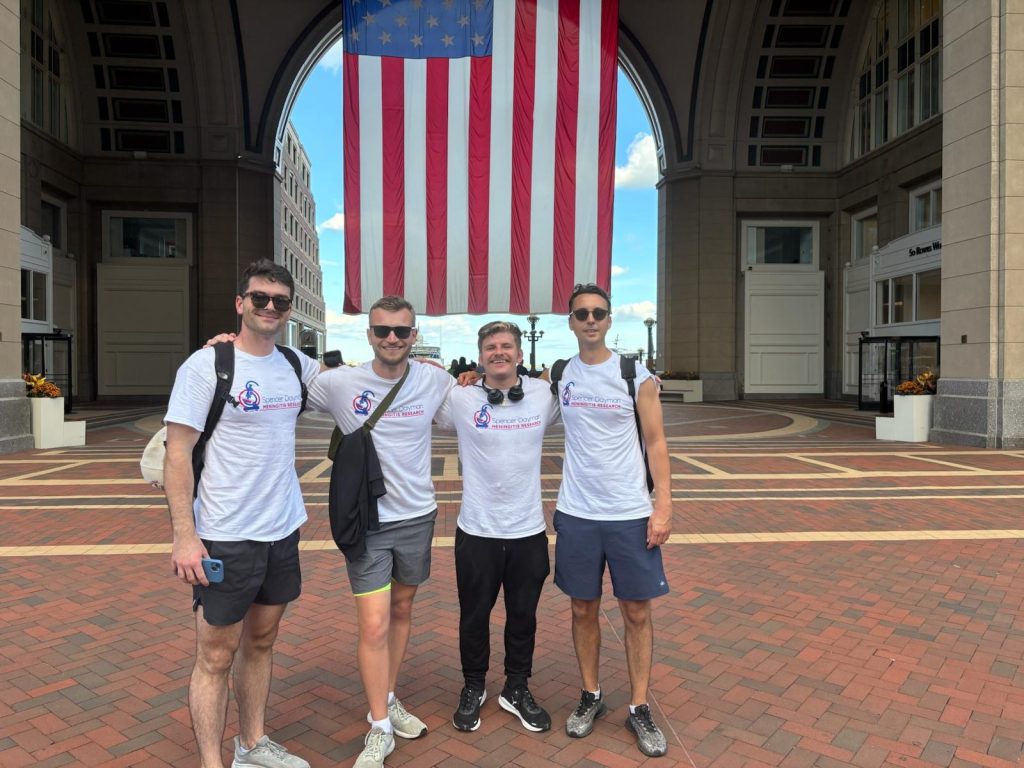
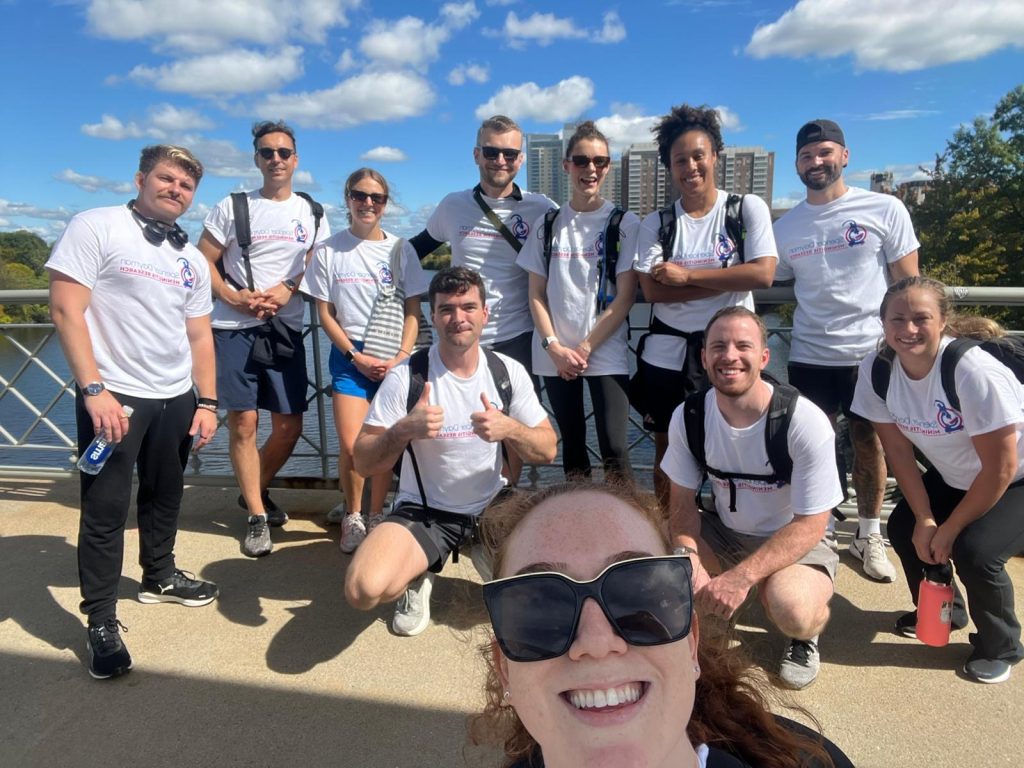
Last week, our team put that belief into action by lacing up our walking shoes and collectively coming together to take on a 42km marathon walk on routes across London, Boston and Germany. The aim of our effort was to raise funds and awareness for Spencer Dayman Meningitis Research (SDMR) – a charity with deep personal meaning to us as a business, and one whose mission is changing lives.
Our connection to SDMR comes through our colleague Steve Dayman, whose family has been at the forefront of meningitis awareness and research in the UK for decades. Steve’s father, Spencer, continues to run the charity entirely on a voluntary basis -ensuring every pound raised goes directly to advancing research.
This research is already shaping the future of healthcare, supporting advancements such as:
- A five-minute diagnostic test for meningitis and sepsis, being pioneered at the University of Bristol.
- Research into a vaccine for invasive Group A Strep, one of the major causes of sepsis and meningitis.
These developments are potential game-changers for patients and families impacted by meningitis and sepsis.
On the day, our London team mapped a route past seven key hospitals in the city, while our Boston and Germany colleagues mirrored the challenge in their locations. It wasn’t always easy – 42km is a long way! But the grit and determination of our team (and yes, quite a few blisters!) reminded that effort, persistence, and the willingness to keep moving forward together is what drives real change.
The result? Over £7,500 raised – more than 150% of our original target – with every penny going directly into research that could one day save lives. We are so incredibly proud of our team for coming together and uniting on a shared goal, and blown away by the generosity of our community. To anyone who has supported us on this journey, we would like to extend our sincere thanks and appreciation.
For us at Hunter Healthcare, this journey is just the beginning. Over the coming months, we’ll continue to support SDMR through fundraising, volunteering, and awareness campaigns. Watch this space!
-
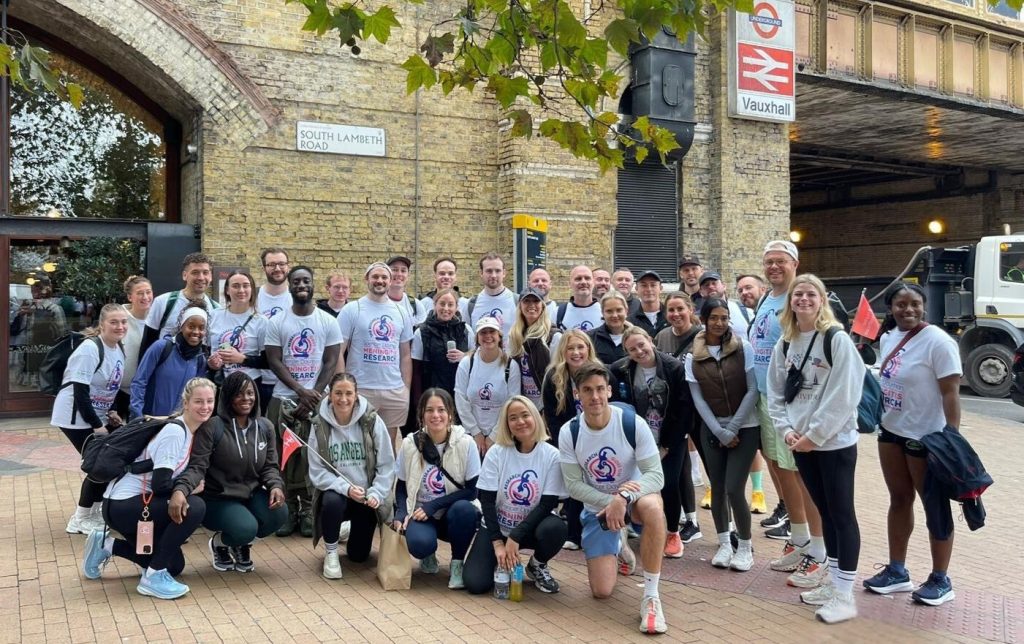
- Team London
-
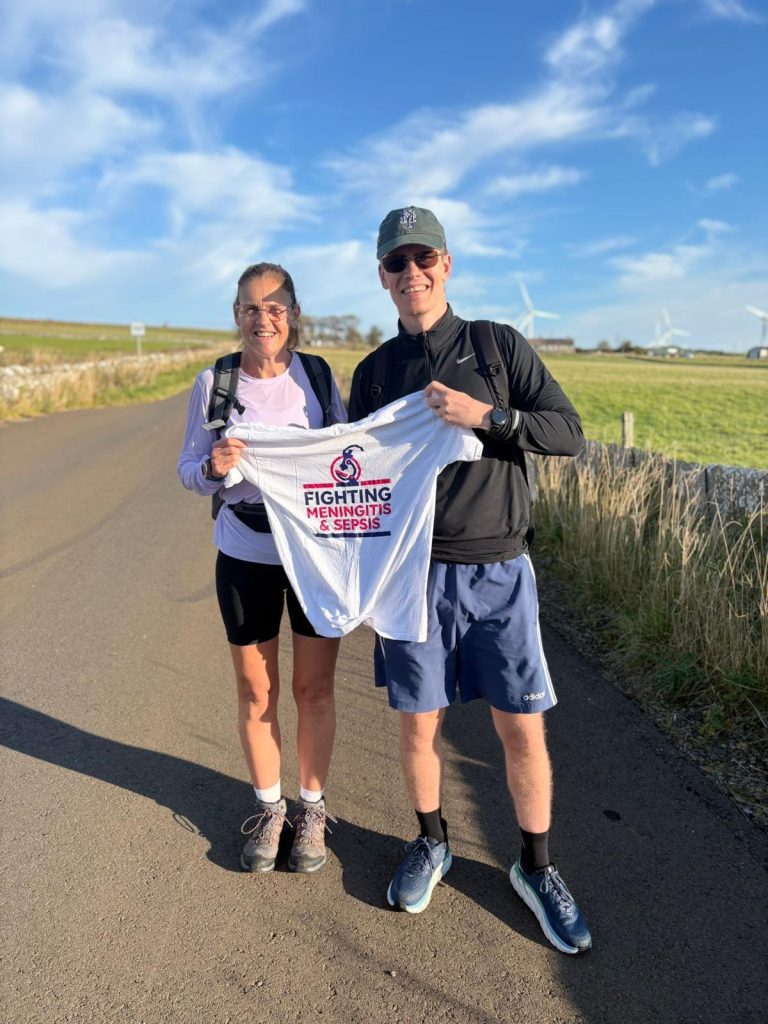
- Team Germany
-
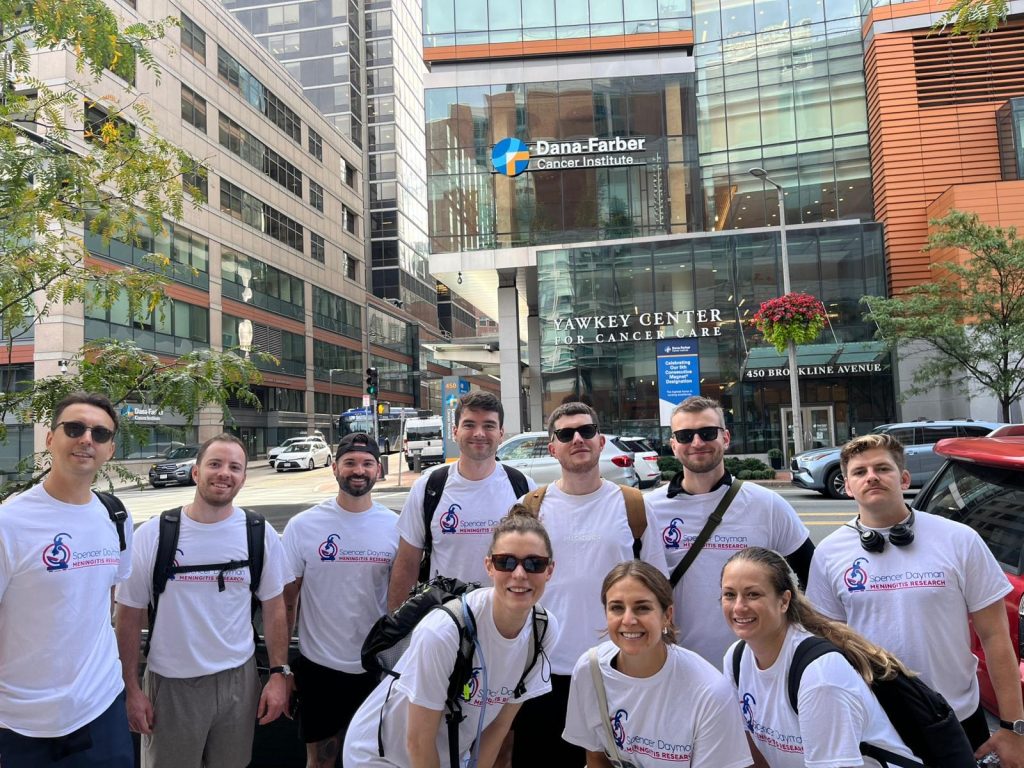
- Team US
-
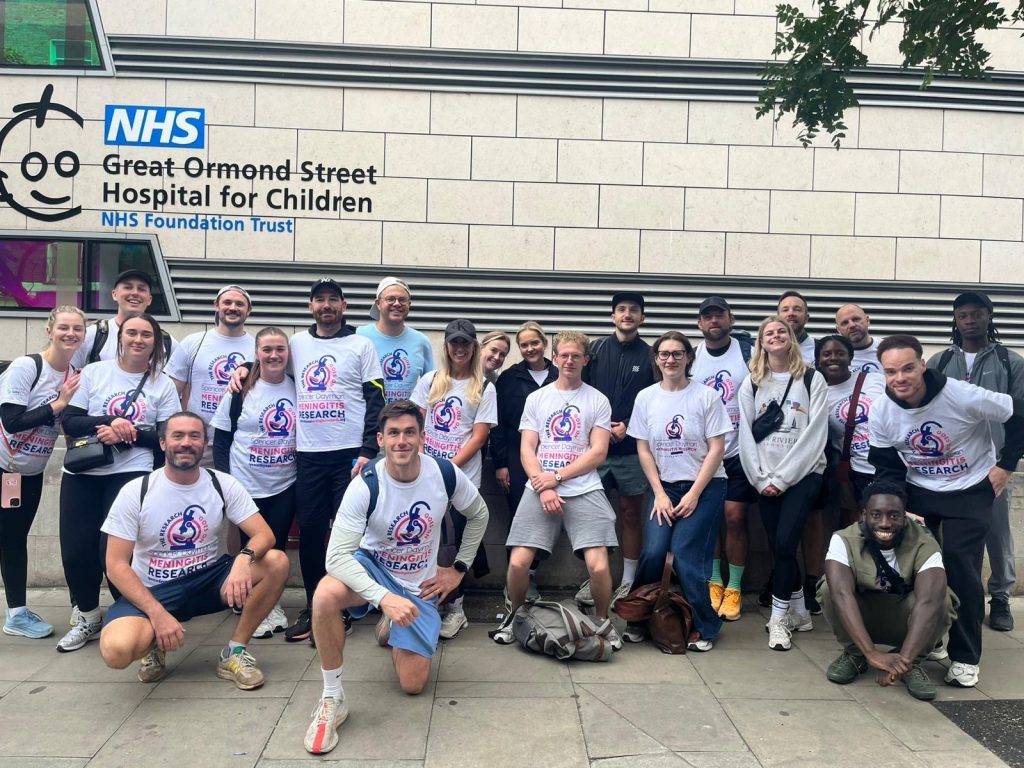
- Team London
-
- Team US
-
- Team US

We’re proud to announce a bold new chapter in our journey to support the transformation of global healthcare. Tim Kelsey is joining Hunter Healthcare as Managing Director of Health Services, leading our growth into consulting and advisory to complement our executive search and interim management capabilities and spearheading the creation of a Global Centre of Excellence in AI and Digital for Health.
Hunter Healthcare is a leading UK-based health resourcing and professional services company, with a growing international footprint across the US, Europe, and now Australia. The mission of this new initiative is clear: to harness the power of AI and data through people to drive smarter, more sustainable healthcare decisions—whether you’re a payor, provider, caregiver, or patient.
In today’s rapidly evolving health landscape, making the right technology choices is critical. From improving the quality and safety of services and their availability when and where people need them, to realising the greatest benefits from precision and population health, Hunter will support decision-making, service design, and delivery at every level of care.
This innovation builds on Hunter’s rapidly growing services business which already supports Financial Improvement, EPR implementation and AI innovation with key NHS partners across England. It also plays to Hunter’s long-standing strengths in sourcing digital, corporate services and life sciences leadership talent.
Ben James, CEO and co-founder of Hunter Healthcare said:
‘Tim is a highly regarded entrepreneur, public service leader and expert in data analytics and broader digital health services in the UK, Australia and internationally. His appointment reflects our conviction that healthcare organisations increasingly need a strategic partner who can help bridge the critical gap between organisational productivity and digital enablement—both by providing the expertise required to deliver services and by facilitating the learning and development that will be essential to sustaining them in an ever-evolving complex, macro and technological landscape. I’m genuinely excited about this next chapter and merging the clear vision we have at Hunter with Tim’s own to establish a world-class, globally recognised firm in healthcare transformation and people services.’
Tim Kelsey said:
‘The first priority for health service professionals – and their patients and communities – is to harness the power of the modern information revolution. Which AI works? How can I make more of the data I have? Building on Hunter’s outstanding business and brand, we will develop an international collaborative that will set a new standard in data-driven decision making.’
About Tim Kelsey
Tim is an internationally regarded expert in the digital transformation of health and care. Most recently, he was CEO of Beamtree, an Australian public company which pioneers applications of AI and data science to drive improvement in patient safety and value outcomes in healthcare.
Prior to Beamtree, he designed and successfully implemented national digital health strategies in two countries – in Australia, as Chief Executive of the Australian Digital Health Agency and in England, as NHS National Director for Patients and Information.
In 2018, Tim founded – and was inaugural chair of – the Global Digital Health Partnership, a unique international collaboration which brings together 30 governments and the World Health Organisation.
In 2000, Tim was co-founder of Dr Foster, a company which pioneered publication of patient outcomes in healthcare. In 2007, he launched NHS Choices, the national online health information service in the UK (www.nhs.uk).
Before Dr Foster, Tim worked for the Independent and the Sunday Times, as well as Channel 4 and the BBC. Tim has also worked for HIMSS, Telstra and McKinsey & Co.
About Hunter Healthcare
Hunter Healthcare is an international resourcing and professional services business founded out of the UK in 2011, with offices in London, Boston, New York, Nashville, Hanover and Sydney. We originally started with a vision of disrupting the recruitment industry and now plan to do the same in professional services through a value based, subject matter expert consulting model to become the global people partner of choice to healthcare organisations.
Full press release here.
For further information, please contact: pwebb@hunter-healthcare.com

We recently hosted our very first Charity Golf Day here at Hunter Healthcare, proudly organised by our Edify Committee in support of Access Sport – a remarkable charity working to open up community sports opportunities for disadvantaged young people in Bristol.
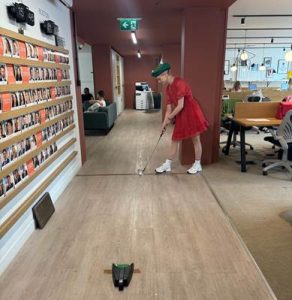
This wasn’t your average day in the office, nor on the green. Inspired by Hunter Healthcare Relationship Manager Tom Hull’s ongoing work with Access Sport, we gave the day a creative twist: a series of golf-themed challenges where each successful putt earned either a £10 donation to this very worthy cause or a precious five minutes off our Friday finish time. It was the perfect mix of friendly competition and meaningful purpose.
It was great to see the energy from our team throughout the day – whether you were kitted out in full golfing gear, showing off your short game, or simply cheering on your teammates, every single person brought something special to the occasion. Special mention to Mez’s iconic outfit and Izzie’s top-tier golf hat (pictured below) – true testaments to the spirit of the day.
-

- Mez’s Golf Day Outfit
-
- Izzie’s Golf Day Hat
Thanks to the enthusiasm and generosity of everyone involved, we were able to raise an amazing £1,000 for Access Sport. This funding will help ensure more young people in Bristol can experience the confidence and connection that comes from being part of a sports community.
Thank you to everyone who took part and supported such a fantastic cause, and here’s hoping for plenty more great days like this!

A Leap into Digital Health
How Did Clare McMillan Make the Leap into Digital Health?
Clare McMillan didn’t take the typical route into digital health, she actually started out in media, holding a range of roles at the BBC. In fact, when I asked her how it all began, she laughed and said it started with a phone call she wasn’t expecting. The shift to healthcare came as a bit of a surprise, sparked by a call from a former colleague who had moved to the NHS and asked if she’d be interested in helping with a six-month review project at Guy’s and St Thomas’ NHS Foundation Trust (GSTT). “I thought, ‘Why not?’” she told me. “It was something completely new.”
What started as a six-month gig quickly turned into something more permanent. She credits her early success to a network of mentors and sponsors who were genuinely invested in her potential. Within a few years, Clare had moved from Head of Service Delivery Transformation to Deputy CIO – a role that reported directly to health tech leader and CIO Beverly Bryant. She called those years a “fiery intro” to the world of digital health, and it’s clear the pace never really slowed.
Reflecting on the shift from media to healthcare, Clare pointed out that the BBC and NHS share some surprising similarities – both are public institutions, both are highly regulated, and both can be resistant to rapid change. But technically? It was a whole new world and the shift was steep. Broadcasting had already gone through digital transformation, while the NHS was still working with legacy systems, it was still catching up. One of her biggest learning curves was around patient data governance and understanding how data is stored, accessed, and used across primary and secondary care.
What Drew Clare to the London Ambulance Service?
After leading several major projects including supporting the implementation of the Epic EPR across GSTT, King’s College Hospital, and Royal Brompton – Clare was approached by the London Ambulance Service (LAS). She wasn’t actively looking for a new role at the time, having just reset the digital strategy at GSTT with a team of over 200 in place.
When I asked her what made the role stand out, she said it was the chance to do something different. LAS is a smaller organisation so the opportunity to join the Trust where she could influence digital strategy at board level, while navigating a totally different operational model, was hard to resist. “It felt like a fresh challenge, not just a new role,” she told me. She now leads a team of around 120 to 130 people, but it was the opportunity to help shape strategy from the top that made it such an exciting move. “It’s a chance to build, to shape, to really have an impact,” she said. And from the energy in her voice, I could tell she means it.
What Makes Digital Leadership in Emergency Care Unique?
Clare told me she quickly realised that LAS operates very differently from acute trusts. LAS isn’t your typical healthcare trust. When she first joined the executive board, she was one of only two women among six men – a ratio that’s now a more balanced five to three. “We’ve made good progress,” she said, and spoke warmly about the team dynamic, describing it as strong and cohesive.
We talked about how ambulance services occupy a unique position in the system – somewhere between healthcare and emergency response. In many ways, they operate more like the police or fire services than a hospital. “We don’t really have ‘patients’ in the usual sense,” Clare explained. “And that difference really shapes the kind of digital approach we need to take.” It’s not just about systems that support continuity of care – it’s about responsiveness, coordination, speed. The kind of digital infrastructure needed here is operational at its core.
How Does Clare See the Future of Digital Health?
As our conversation turned toward the future, Clare didn’t sugarcoat the challenges. While digital health has come a long way, she says, progress still feels slow at times. “There’s a lot of ambition – but not always the structure or funding to match.” She makes a point to stay close to what’s happening in the wider sector, staying current means making time for industry events and connecting with peers.
Right now, data integration and interoperability are top of mind, especially with major EPR rollouts. “We have to ask ourselves: have we genuinely changed the way we work?”
She’s also refreshingly realistic about AI. “AI is just a tool,” she said. “It’s not going to fix broken processes or bad data. All the challenges we faced with EPR will still exist with AI if we don’t get the foundations right.”
Her approach? Start with the problem, not the tech. “Yes, AI and automation are powerful, but they must be applied with purpose.” One hurdle she pointed out is that AI is typically funded through revenue, while NHS innovation funding often comes from capital – which can make pilots difficult to fund and scale. For Clare, successful innovation needs more than ideas – it needs ring-fenced budgets, clear business cases, and time to prove value.
How Does Clare Balance Career and Parenthood?
At one point in our chat, I asked Clare what her proudest milestone was – and without skipping a beat, she said: “Becoming a parent.”
She has six-year-old twins, and while returning to work after maternity leave wasn’t especially hard – she and her partner share parenting duties, so finding a sustainable rhythm that works for both career and family has taken time. “Before kids, I could throw myself entirely into work,” she said. “I still want to do that, but it’s not always realistic.”
She credits long, honest conversations with her partner for helping her find the “middle ground” – being fully present at work without always being switched ‘on’. Clare also praised the NHS for its flexibility, which has helped her build a working pattern that suits family life. She typically works three days in the office and two from home but adapts when needed.
Who Has Inspired Clare Along the Way?
Clare is quick to credit those who’ve helped shape her career. At the BBC, she had a colleague (now a close friend) who showed what it looked like to work with values, not just targets. “He showed me what commitment to improvement really looks like,” Clare said.
At GSTT, she told me that Beverly Bryant’s leadership during the Epic rollout left a strong impression. “Watching her navigate a high-pressure, high-stakes environment with poise and determination taught me a lot about resilient leadership.”
Now, at LAS, she works alongside Daniel Elkeles, the CEO. She described his enthusiasm for collaboration and innovation as “infectious.” You can tell she’s still learning from the people around her and enjoying it.
What Advice Does Clare Have for the Next Generation?
As we wrapped up, I asked Clare what advice she’d to her younger self or to women entering the world of digital health. She didn’t hesitate. “Don’t doubt yourself.”
Though she doesn’t come from a technical background, Clare’s experience in service delivery and programme management has proven to be just as valuable and this is exactly why her perspective matters. “We don’t have nearly enough women in digital leadership roles,” she told me. “And digital health is such a powerful space for women to make an impact – whether through data, innovation, or service redesign.”
She’s also actively involved on developing new talent through the NHS graduate scheme and is passionate about changing the way we talk about digital. For Clare, it’s not just a technical function – it’s a driver of quality and transformation. “Digital health needs diversity of thought,” she told me. “It’s not just servers and firewalls. It’s about improving care, rethinking services, and creating real impact – and that’s exactly why we need more women in digital leadership.”
Walking away from my conversation with Clare, what really stuck with me wasn’t just her impressive CV or how much she’s achieved – it was her clarity, her honesty, and the sense that she’s genuinely in this to make things better. She is proof that you don’t need to follow a traditional path to lead with impact. She’s not here for the buzzwords, she’s here to build things that last. Whether it’s building digital strategies, mentoring new talent, or finding balance at home, Clare’s doing it with purpose and showing others that they can too.
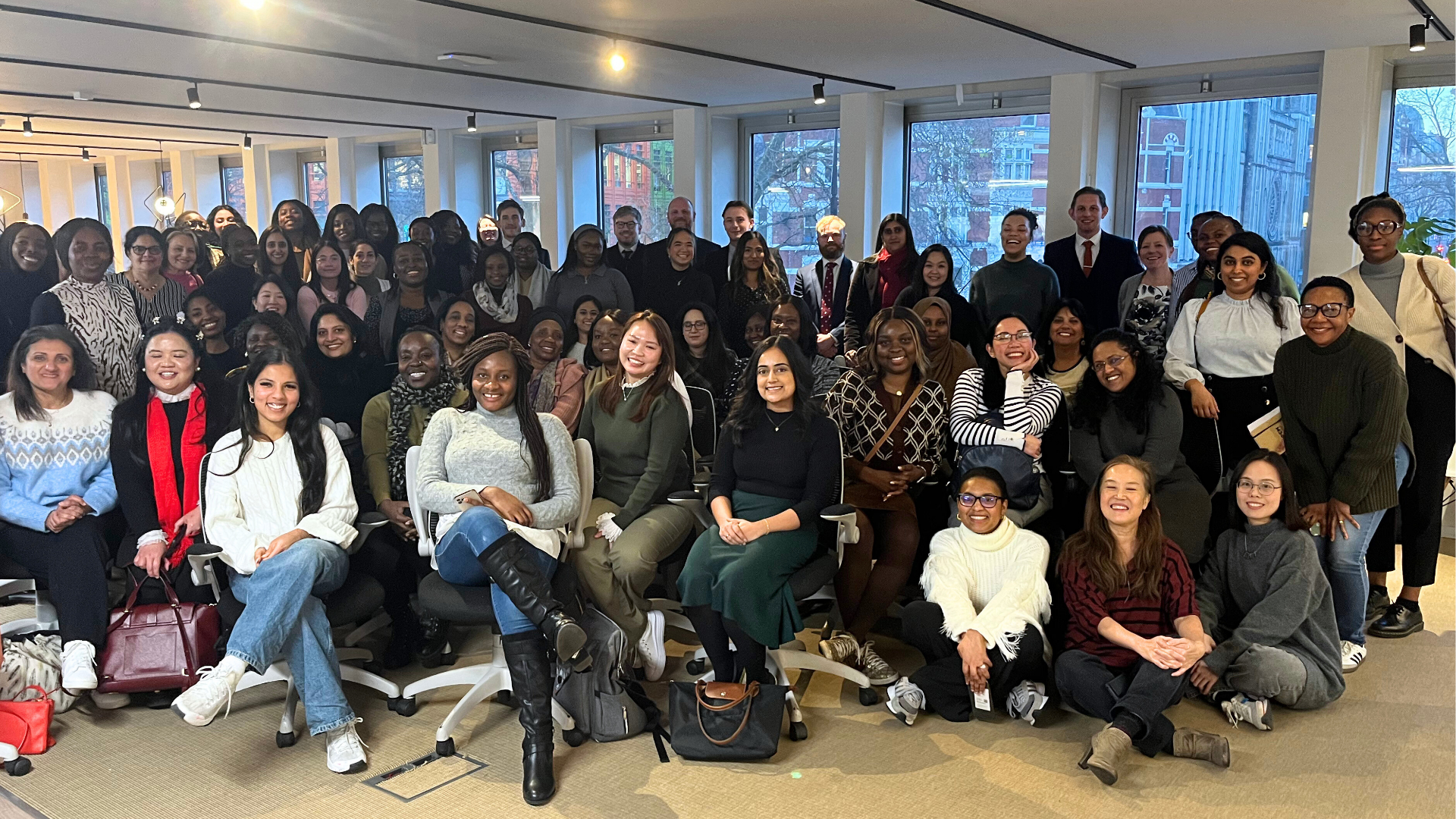
At Hunter Healthcare, we believe that true progress in healthcare leadership is driven by diversity, inclusion, and equitable access to opportunities. This belief forms the foundation of our ongoing partnership with The Shuri Network – a pioneering organisation dedicated to championing women from ethnic minority backgrounds in digital health. Together, we are fostering an environment where underrepresented voices are amplified, and meaningful career opportunities are unlocked.
A Shared Vision for Inclusive Leadership
The digital health sector is evolving rapidly, but representation at leadership levels remains a challenge. The Shuri Network has been at the forefront of addressing these disparities, advocating for greater inclusion and breaking down barriers to leadership for women from minority ethnic groups. At Hunter Healthcare, we share this vision and are committed to ensuring that talented professionals from all backgrounds have the support they need to thrive.
Impact Through Action: Recent Initiatives
Our collaboration with The Shuri Network has translated into tangible initiatives aimed at professional development, career advancement, and leadership empowerment.
Fellowship Event: Inspiring the Next Generation
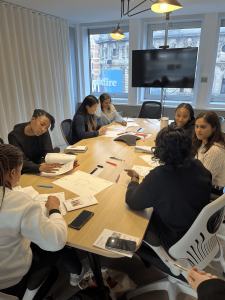
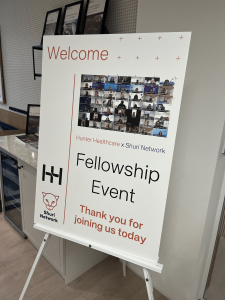
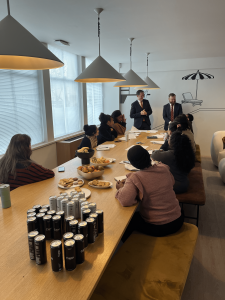
Recently, we had the honour of hosting a fellowship event at our London headquarters in partnership with The Shuri Network. The day was filled with invaluable insights, with esteemed speakers including Dame Neslyn Watson-Druée, DBE, and expert panellists Lisa Emery, Eddie Olla, Patience Chinwadzimba, and Abi Olapade. Their discussions on diversity, leadership, and innovation in healthcare provided attendees with not only inspiration but also actionable strategies for career progression.
Beyond panel discussions, our team led interactive workshops focusing on practical skills development, including CV tailoring and job application strategies. These sessions were designed to equip attendees with the tools and confidence needed to advance in their digital health careers.
Career Development Webinar: Building Stronger Networks
Expanding our support beyond in-person events our Digital, Data & Technology team recently hosted a webinar with The Shuri Network, furthering our mission to provide accessible resources for career development. This session covered essential topics such as:
→ LinkedIn Strategies: How to effectively build a personal brand and network to unlock career opportunities.
→ NHS Jobs & the TRAC Recruitment System: A practical guide to navigating applications and standing out in the hiring process.
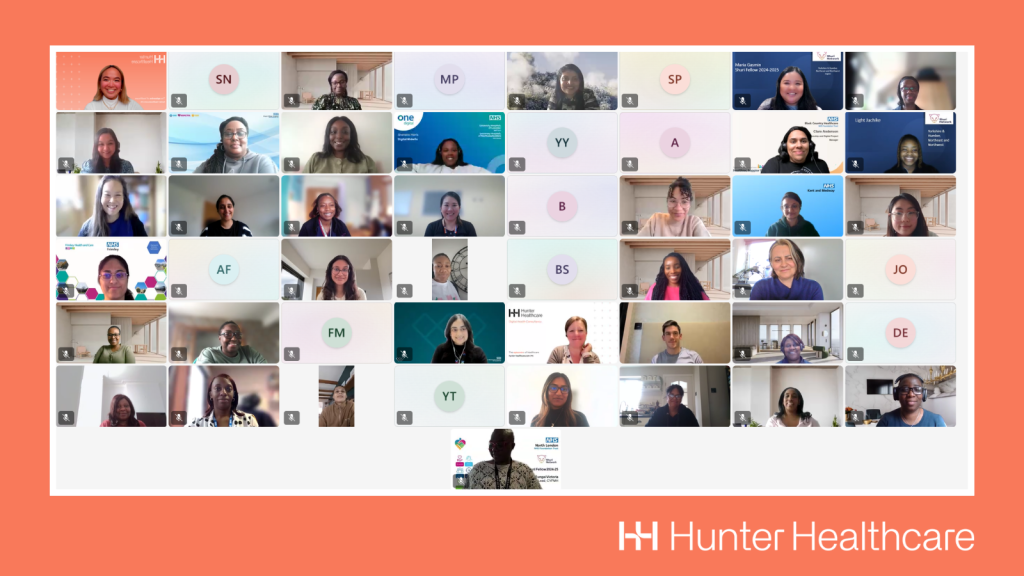
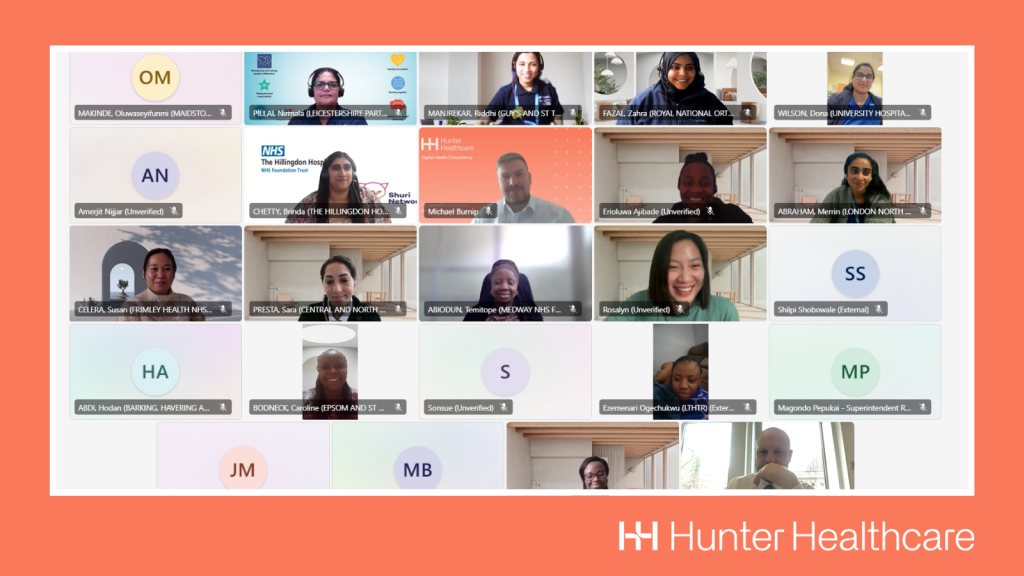
The enthusiastic participation and engagement in these sessions reaffirms the demand for such targeted support and mentorship.
Looking Ahead: Driving Systemic Change
While we are proud of the progress made through our partnership, our commitment to fostering diversity in digital health leadership is ongoing. We will continue working closely with The Shuri Network to expand opportunities, develop innovative initiatives, and ensure that the future of digital healthcare leadership reflects the diversity of the communities it serves.
To all professionals striving for leadership roles in digital health: we see you, we support you, and we are committed to championing your success. Together, Hunter Healthcare and The Shuri Network will continue to pave the way for a more inclusive and dynamic healthcare landscape.

Hunter Healthcare put people at the centre of everything we do, working with the health and care sector to ensure that the best available people serve on their boards and in other leadership positions. To ensure that we are able to do this effectively, we regularly undertake research projects that help us to understand how we can do better and publish our learning so that improvement can be a shared endeavour.
Two years ago, we published the first report in our “The Way Forward” series, focusing on the experience of Black, Asian and ethnic minority NEDs in the NHS. We have now completed the second report in the series, which looks at the experience of disabled people serving as Chairs and NEDs in the NHS, a copy of which is enclosed.
Working in partnership with the Disabled NHS Directors Network (DNDN) we developed a series of questions that we posed to the disabled NED community in a combination of questionnaires and one – to – one conversations. Their responses paint a picture of life as a disabled NED in the NHS today: up and down the country, disabled NEDs are making a significant contribution to the leadership of the NHS, but it is clear that not all are receiving the support they need and to which they have a legal right. To address this and a number of other issues that are holding back disabled NEDs, our report identifies 16 recommendations / and or best practice that will promote NED roles to disabled people, improve their experience as candidates for NED roles and enable and support disabled NEDs to give their best to these important roles.
We have called this series of reports “The Way Forward” because they identify the change needed to create the conditions in which a diverse community of NEDs will thrive and fully contribute to the NHS today and in the future. We hope our research is both helpful and informative. But we also want it to make a difference – we invite you to be part of that change: learn from the experience of disabled NEDs; review the recommendations and best practice identified and show your organisation the way forward.

Breaking Boundaries in Digital Health: A Journey of Passion & Persistence
The digital health industry is a dynamic and rapidly evolving sector, but it’s also one that has historically been male-dominated. However, exceptional leaders like Evelyn Okpanachi have shown that perseverance, curiosity, and passion can overcome these barriers. In a open and candid conversation, Evelyn shared her journey, insights, and commitment to empowering women in tech, offering an inspiring perspective on the challenges and opportunities in the digital health landscape.
Evelyn’s career path began in the healthcare sector, initially far removed from the digital health space. Reflecting on her early days, she recalls, “I started with health studies and management, and my first role was in private healthcare with Bupa.” Her venture into operations and management sparked an interest in project management, but it wasn’t until she began working on several tech-driven initiatives that her passion for digital transformation emerged. Her curiosity led her to explore information technology, despite it not being her initial focus. “I’m a very systems and process person, and you need technology to be able to do that.” This insight paved the way for her transition from management into the realm of IT, software testing, and business analysis. Evelyn pursued multiple certifications and accreditations, becoming a chartered Business Analyst, a certified software tester, and a practitioner in project management. These skills equipped her to navigate the complex digital landscape, particularly within the public healthcare sector.
Transitioning from private to public healthcare, Evelyn experienced what she described as a “rude awakening.” The stark difference in resources and decision-making processes between the two sectors became immediately apparent. “Coming from the private sector, where you have a very large pot to spend on, moving to the public sector was really eye-opening.” However, this shift only fuelled her determination. Evelyn embraced the challenge, focusing on software development, implementation, and digital strategy within the NHS, which ultimately shaped her holistic approach to Programme Management.
One of Evelyn’s greatest passions is helping more women break into the technology industry. Reflecting on her own experience, she observed, “I was the only female in digital, the only female in IT in multiple organisations. It’s honestly never been an issue for me, but I’d love to see more women there.”
She is determined to dismantle the fear that many women feel towards tech-related roles. “There’s a fear factor, and that’s the reason why many shy away. How do we stop that? How do we break that?” She believes in starting at the foundations, encouraging young girls to embrace STEM subjects, and building their confidence in male-dominated fields. Evelyn shares a personal anecdote about her daughter, who was initially afraid of technology but now confidently navigates it. “It’s really exciting to see women stepping out of their comfort zone to embrace the tech culture.”
She is a firm believer that women possess natural project management skills, even if they don’t realise it. “I always find women are extremely good Project Managers, they just don’t know it. You manage your home, your finances, your holidays – that’s project management in layman’s terms. So why can’t you do it in the workplace?”
Evelyn speaks through removing limits, creating a mindset shift. She emphasises that one of the most significant barriers women face in tech is the limits they place on themselves. “We put a limit on ourselves,” she says. “Why are you placing limits around yourself when you can evolve and develop yourself further?” This mindset of self-imposed constraint is something she is passionate about breaking. She often coaches women to step beyond their comfort zones and embrace opportunities for growth, even in unfamiliar fields. Her approach is grounded in practicality. Drawing on her experience as a project manager, she highlights how women can mitigate risks in their careers, just as they would in a project. “Half of the time, fear is a risk. So, what mitigations are you putting around that risk? If you have a plan, suddenly that fear doesn’t seem so daunting.”
Despite working in environments where she was often the only woman – and sometimes the only woman of colour – Evelyn has never let this hold her back. “I am what I am, and that’s not my problem. If someone has an issue with it, that’s their problem, not mine.” She chooses to focus on the skills and value she brings to the table, rather than her gender or race. While she acknowledges that being the only woman in the room might stand out to others, she has always prioritised her capabilities over external perceptions. “What do I bring to the table? That’s enough for me. If it’s not enough for others, that’s their issue.”
Evelyn’s passion for empowering women extends beyond her immediate circle. She’s driven to inspire girls and women from all backgrounds to pursue careers in technology and digital health. “It’s about removing fear and building confidence,” she explains. Her coaching sessions often lead to what she calls “paradigm shifts,” where women of all ages, backgrounds, and identities begin to see themselves in a new light, discovering they are far more capable than they ever imagined.
One of the most powerful lessons she shares with women is the importance of “failing forward.” “Sometimes you have to step into the unknown, fail, learn, and grow. It’s part of the process.” By encouraging women to embrace challenges rather than shy away from them, Evelyn hopes to create a culture of confidence and resilience among women in tech.
When asked about her inspiration, Evelyn gives an unexpected yet refreshingly honest answer: “Funny enough, I was actually going to say myself. I don’t really have role models. My motivation comes from within.” She is quick to acknowledge and admires the accomplishments of many women in the industry, and finds inspiration in their unique journeys and successes, but remains focused on her own path. “There are phenomenal women doing amazing things, and I respect that. But ultimately, I have to keep going, keep pushing for me. That’s what inspires me.” For Evelyn, the achievements and morals of others are motivating, but her true drive comes from her personal goals and relentless determination, “it’s a nice thing to wake up to every single day”
Evelyn’s journey is a testament to the power of perseverance, passion, and a relentless focus on personal growth. Her story serves as an inspiration to anyone looking to break into the digital health space, particularly women who may feel intimidated by the male-dominated nature of the industry. By sharing her experiences, she not only highlights the possibilities within the field but also paves the way for a new generation of women leaders in technology.

Hunter Healthcare is proud to have worked in partnership with the Association of Professional Healthcare Analysts’ Chief Data and Analytical Officer Network to research and publish a landmark report;
What Makes a Top Chief Digital and Analytical Officer?
This deep dive into a relatively new role in the NHS explores the essential attributes needed to make it to the top in this field and makes recommendations to ensure the Chief Data & Analytical Officer (CDAO) role reaches its full potential in the NHS. At Hunter Healthcare, we are proud to support this research and advocate for stronger, more empowered CDAOs within the NHS.
Our report sheds light on how the role of the CDAO is evolving, capturing both areas of progress and those that are still needed for a path to success. It may not have all the answers, but we can support CDAOs to help them grow and evolve as a core part of the healthcare landscape. The report looks at key areas that will strengthen the position of the CDAO and help unlock the full potential of data and analytics in the NHS.
First, CDAOs need to be elevated to an executive level, or at least have their voice heard loud and clear in executive decisions. It’s critical for such a presence to exist in order for data and analytics to be recognised as strategic assets of the organisation. We must set up CDAOs so that they can contribute directly to the strategic direction helping the NHS embed data insights into a patient-centred, more efficient, modern data-led health service.
Further, the role of the CDAO should shift from simply reporting to engaging in strategic decisions. This will give those in the role scope for becoming more predictive and proactive towards data-driven actionable insights. CDAOs can be catalysts for improving data liquidity in the NHS and should be directly involved in leveraging the power of advanced analytics and AI for their organisations, alongside helping to shape national policy in the context of the Federated Data Platform and Secure Data Environments.
Formalised career development programs for data professionals also need to be established, which would offer ways to develop skill levels and routes to professional accreditation so that the data specialist is resourced and incentivised in their quest for further development.
The report also examines nurturing of the next generation of CDAOs through flexible recruitment practices, which develop the talent early by hiring directly from universities, or even schools, to guarantee a steady supply of skilled data professionals.
These recommendations, in addition to building a robust network around the role of the CDAO, will enable CDAOs to drive the agenda in innovation, improvement in the quality of NHS care, and help to drive insight-driven excellence in the NHS.

The Teams call connected, and there was Linda — someone I have always enjoyed speaking to due to her bright and optimistic nature. We started off with a lighthearted exchange about the rare sunshine gracing London and our hectic schedules, noting how we had to reschedule this call three times. It was great to finally catch up with her again.
We talked through her varied career, reminiscing about her early days in family and local council work before she stumbled into the Health Informatics Service (HIS) for 18 months. Her first major challenge was taking paper out of GP practices and replacing it with SystmOne. Initially, the GP practice admin staff and nurses, who were heavily reliant on paper, were understandably resistant to change. However, three months later, they were asked if they wanted to revert to the old system but they loved the new digital system and the change it brought. Linda recalled that it was such an amazing transformation.
She then moved to Bradford to join the NPFIT programme. “I’m showing my age now, as you were probably in nursery!” she joked. The programme aimed to standardise work processes and ensure that the systems used were in the same language. It was at this point that NHS England realised that all systems should use HL7 . The programme team at Bradford worked with the national digital team to digitise end-to-end patient pathways. She believed this was the beginning of the NHS’s digital transformation journey.
Her career was filled with opportunities to meet wonderful people and take on failing or delayed projects across various organisations including Leicester Child Health Services, Luton and Dunstable NHS Foundation Trust, and Doncaster and Bassetlaw NHS Foundation Trust. She began to see the patterns of the gaps and challenges within all these systems and worked her hardest to deliver these successful projects.
Eventually, she saw a job opening at Imperial College Healthcare NHS Trust, interviewed with the CIO for the Health Records Manager role where the task was to digitise health records – and got the job. Expecting a bustling environment, she was surprised to find the team relatively quiet with not much to do. Linda wrote a business case and went out to tender for an EDM system, cutting paper records on-site, and saving the Trust £9 million. Her dedication and success on numerous projects saw her rise up the ladder to the position of Associate Director of Digital Transformation. “I think it’s really important to try and make a difference,” she said.
When asked about professional or personal setbacks, Linda acknowledged the challenges of working in a male-dominated industry. Handling her emotions was one of the hardest aspects. “I get quite animated, especially if it’s something I really believe in, and the emotion can really come through,” she explained. This sometimes meant that while she said the right words, they didn’t always hit the right points. She admits that it did take her a while to learn the intricacies of the NHS.
Reflecting on her time at the HIS, she noted that they were very monetarily driven, which she enjoyed – “my drive is to save lots of money,” she mentioned, joking that it’s something easier to do at work than in personal life.
However, focusing on monetary aspects can be difficult when patient care is interconnected. Talking about replacing systems or products is challenging because it affects everyone — clinicians and patients alike, especially if the change is perceived as being driven solely by financial considerations.
“You need to work around different stakeholders and adjust your language to who you’re speaking to. Make them understand that you are here for them to make their life easier and better for clinicians and patients.” Linda emphasised. Focusing on all the benefits, which in turn saves money, is crucial.
Language can be one of the hardest parts of working in the NHS, according to Linda. Each Trust has different ways of working, and she often has to satisfy the language across four very different trusts with different cultures and focusses as her role supports programmes running across the North West London Acute Provider Collaborative. “It’s all about how you portray your message,” she concluded. Navigating through who’s who and understanding how to work effectively is also challenging.
Linda mentioned the difficulty of being in a room full of men and trying to get them engaged and listening to her. “Are you seen as a professional or a mother?” she pondered. She notes that there are times where men will only listen to other men, but Linda believes this will change over time. “I don’t think they realise it, but maybe it’s a comfort thing!” she added.
She doesn’t necessarily see this as purely a gender issue, but more about who you know and respect. “The more you can call out things you aren’t comfortable with in a respectful yet serious way, the more inclined they are to change their behaviours and notice,” she advised.
However, Linda acknowledged that strong women can sometimes be seen as a threat, with their emotions or assertiveness dismissed as hormonal. Women face a delicate balance of upholding high standards while keeping certain egos in check. What’s crucial, Linda said, is to focus on the main driver and remember that everyone is there to deliver the best patient care, and supporting each other is key.
We agreed that it’s important to articulate your thoughts clearly while maintaining respect. “You need strong women who support other women rather than blame them to get into the circle with the men,” Linda said. “Don’t just feed the male beast; find ways to collaborate with a various number of people on different projects.”
When asked about her hopes for the next generation of leaders in digital health, Linda expressed her desire to see more women stepping into these roles and encouraging young women to seize opportunities. She ensures her team has access to development opportunities, regardless of gender, and advocates for collaborative and positive growth.
Linda has reached a position she never imagined possible and feels a responsibility to pave the way for the next generation. She hosts open-door sessions where team members can discuss anything—home, work, ideas—and she actively brings people from other teams into digital roles if they show interest, allowing them to grow and advance their careers.
Linda shared stories of team members who, with her encouragement, have climbed the ranks to managerial positions. “They are like flowers; you just have to make sure they’re in the right soil, to see them flourish” she said with a smile. It’s particularly special, she noted, when you see this with women working together. We discussed the societal misconception that women are always in competition with each other. In reality, proving that you can do the work is challenging enough—why compete when you can support one another? “We are all in this together,” she said.
I complimented Linda on her beautifully articulated thoughts. Her final advice: “Don’t give up, and don’t take things personally, even if it feels personal at times. Just keep focusing on yourself and your growth.”