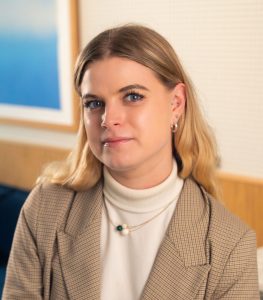

A Name That Carries Weight
There are some names in NHS digital whose reputation really speaks for itself, and Beverley Bryant is definitely one of them. Long before many of today’s programmes, platforms and national strategies existed, she was already helping to shape how NHS digital would evolve. So when I met with her, I fully expected authority, experience and an encyclopaedic understanding of the industry. What I didn’t quite anticipate was how openly she would speak about doubt, confidence, loyalty and the very human reality of leading change at scale.
From the outset, it was clear that Beverley doesn’t see digital as a destination in itself. For her, it has always been about journey, context and purpose. Technology is the enabler, not the point. The real work sits in culture, trust and in bringing people with you through transformation.
An Unconventional Beginning
Before entering the world of IT, Beverley was immersed in languages, studying Japanese and working as an interpreter in the early 1990s. Although she accomplished what she set out to do, she found that achievement alone wasn’t fulfilling. Beverley quickly realised that the destination mattered less to her than the journey. She has described feeling like a “machine” – technically capable, but not truly heard.
That restlessness led her into a graduate consulting scheme across in IT development, and it was there that the logic of technology, problem-solving and transformation really clicked. Consulting gave her pace, variety and exposure to emerging tech, but more importantly, it gave her a voice. It was the start of a lifelong relationship with digital, even though healthcare was not yet in the picture.
Finding Purpose in the NHS
Health came later, but when it did, it stayed. After a decade in consultancy, Beverley worked deliberately to move into the NHS, initially driven by a desire to be closer to family in Leeds, but quickly captivated by the values and complexity of healthcare.
Her first major NHS project opened her eyes to the scale, the pressure and the moral purpose of the system. Delivery never really ends, decisions matter and technology has real consequences for patients and staff. Around 2003, she realised this wasn’t just another sector. This was where she wanted to build her career.
Behind the Scenes of Government
Her move to the Department of Health marked her first CIO role. It was here that she became immersed in the “machinery of government”, gaining first-hand insight into how policy, funding, technology and frontline services connect. Working on national platforms such as NHS Choices gave her a panoramic view of what it truly takes to deliver digital at scale.
But she was also clear that policy and central IT were only part of the story. To be a credible digital leader, she wanted to understand the frontline. She deliberately took on operational and non-IT roles to immerse herself in how hospitals really function, how clinicians work and how pressure feels on the ground. Context, not just command, has always mattered to her.
From Driving Change to Orchestrating It
One of the most striking parts of our conversation was how openly Beverley reflected on the evolution of her leadership style. Early on, she described herself as direct, passionate and very much leading from the front. In a system as federated as the NHS, she found that technology was often treated as “an IT project”, something to be handed over rather than owned by clinical and operational leaders.
Over time, particularly through roles at organisations such as Guy’s and St Thomas’ and programmes like the Apollo EPR, she learned that sustainable change doesn’t always come from being the loudest voice in the room. It comes from creating the conditions for others to lead. She moved from driving to orchestrating, from pushing at the front to pulling strings from behind, ensuring clinical and operational teams truly owned transformation.
Transformation, Not Just Technology
Beverley is uncompromising on one point: digital transformation is never just about digital. She smiled when we talked about how often technology is treated as something that can simply be “switched on”. Her phrase was that people think it’s “magic, not electric”.
Systems get bought, programmes get announced, but the harder work of changing behaviours, redesigning processes and building capability is underestimated time and time again. This is why she insists on end-to-end ownership and genuine partnership between digital, clinical and operational teams. It’s also why she has little time for optionality – if a new way of working is safer and better, it has to be the way of working.
Her pragmatism came through just as strongly when we spoke about AI. She sees the potential, especially in automation and workforce processes, but is cautious of hype. “Healthcare cannot afford to chase trends without clear lines of sight to safety, governance and real value”.
The Power of Sponsorship and Loyalty
What came through just as strongly as Beverley’s strategic authority was the respect she has for people. She told me about an early Chief Executive who once gave her a handwritten Christmas card and a bottle of champagne simply to say thank you. It was the first time she had truly felt valued, and it stayed with her.
Today, she leads in the same way – through personal notes, time, sponsorship and a genuine interest in others’ growth. She believes loyalty is earned through trust and recognition, not demanded by hierarchy. It was clear how much pride she takes in the teams she has built and the women she now supports into senior leadership.
Confidence, Scars and Knowing When to Walk Away
Beverley was equally open about the harder chapters. We talked about environments that didn’t feel fair, about situations that took an emotional toll and about the decision to walk away when something could no longer be fixed.
Her father’s advice, she told me, was simple: if it isn’t right, then leave. You don’t have to stay and be diminished. She followed that advice, rebuilt her confidence and returned stronger. Those experiences leave scars, but they also bring clarity about what you can control, what you can’t and when it’s time to move on.
Advice to the Next Generation
When I asked what advice she would give to women aspiring to leadership in technology, her answer was immediate: be bold. Put your hand up. Say yes to opportunities. Find sponsors who will back you. Shadow people you admire. Learn how the system really works. And trust your own capability.
She laughed as she told me that early in her career in London, she once tried to adopt a “posh” accent to fit in. It didn’t last. Eventually, she realised the only sustainable way to lead is to be yourself. Your voice, your background, your way of thinking – that is the value you bring.
Lessons from the Past, Eyes on the Future
Looking back to herself in 2003, stepping into her first senior roles, Beverley spoke candidly about imposter syndrome and about sitting in rooms where everyone seemed more confident, more qualified, more entitled to be there. What she would tell that younger version of herself now is simple: if you know your craft, can explain your thinking and you are prepared to speak up, you belong. You don’t have to know everything. You do have to believe you have a right to be in the room.
Listening to Beverley, I was struck by how her confidence today feels both formidable and hard-won. Built through experience, through setbacks, through learning when to lead from the front and when to enable from behind. She is, without question, one of the architects of modern NHS digital. But I think what defines her most is not just what she’s built, it’s how deliberately human she has remained while building it.