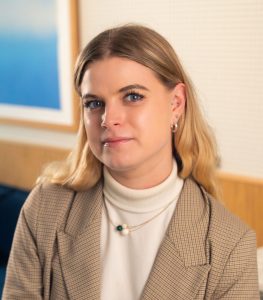

Learning the system from the ward floor
Maria’s understanding of digital didn’t start with technology – it started on the ward. After qualifying in 1993 and beginning her career at Royal Surrey, she expected to work in paediatrics, but a medical ward placement changed her trajectory. The reality of frontline care and the way systems either support or hinder it, made a lasting impression.
As she moved through cardiac, medical and surgical roles at Royal Surrey and Kingston Hospital, and later into outpatients, she began to see patient journeys end to end. That exposure laid the groundwork for a career focused on making systems work better for the people using them.
Seeing the gaps – and stepping into them
While working in outpatients, Maria became acutely aware of the gap between clinical advice and the services available to support patients. Long before national stop-smoking initiatives existed, doctors were advising patients to quit without clear pathways to help them do so. Rather than accept that, Maria took action, explaining that “if the process isn’t working, the technology – or the policy – won’t fix it.”
She went on to lead stop-smoking and alcohol harm-reduction services across several organisations, including more than a decade at St George’s Hospital as a Clinical Nurse Specialist. Alongside service leadership, she developed and delivered training programmes, building a strong foundation in education, change and system thinking.
An accidental route into digital
Maria’s move into digital was not a deliberate career choice. While working as a clinical lead at Royal Surrey, she led the upgrade of their electronic observations system and was asked to sit within the IT team as a nurse. That experience proved pivotal. She quickly recognised that what appeared to IT as a small system issue could have serious implications on the ward. As she explains, “when someone is locked out of a system, that’s not an inconvenience – it’s a patient-safety issue.”
Naturally, Maria became the bridge between clinical teams and digital colleagues, translating real-world workflows into digital language and vice versa.
Leadership forged under pressure
In 2017, Maria informally moved into clinical informatics, supporting implementations including BadgerNet and community systems. She later became Chief Nursing Information Officer as Royal Surrey embarked on its EPR programme – signing the contract the day before the first COVID lockdown was announced.
Delivering a greenfield EPR during a pandemic was intense and unforgiving. Reflecting on that period, she says “there aren’t many CNIOs who’ve implemented an EPR twice – doing it during COVID was something else.” The experience reinforced the importance of strong clinical leadership at the heart of digital transformation.
Trust is built on presence
Following EPR go-live, Maria spent over a year on the ground listening to staff, resolving issues and rebuilding confidence in the system. Her visible, hands-on approach earned her Royal Surrey’s Corporate Services Champion Star of the Year award. For Maria, leadership is about proximity, not hierarchy. “My team is everything,” she says. “Because of them, we can make meaningful change.”
Today, her focus is on optimisation, interoperability and ensuring digital solutions genuinely support nursing and midwifery practice.
Digital is about people, not platforms
Maria is clear that digital success is never about technology alone. It is about people, processes and culture. She is passionate about face-to-face engagement and designing systems that reflect real clinical workflows rather than digitised paper. As she puts it, “we don’t need paper processes made digital – we need digital processes designed properly.”
Her teams spend significant time in clinical areas, working alongside staff to understand pressures, interruptions and patient needs.
Learning from those who lead well
Throughout her career, Maria has been inspired by leaders who combine compassion with clarity. She credits her former Chief Nurse, Jo Mountjoy as a role model for patient-first leadership and attention to detail, and speaks highly of working closely with her CCIO, Andrew Carne, and Chief Nursing Officer,. Beyond work, she also credits her husband, Doug Morris, for his constant encouragement and support.
Confidence, voice and representation
Maria’s experience in digital leadership has been shaped by strong female representation at senior level within Royal Surrey. While she hasn’t faced overt barriers, she acknowledges that confidence is key. Early in her digital career, she was more hesitant to speak up. Now, she is clear that “if you don’t understand something, you can’t make the best decision.”
She is passionate about promoting women across nursing, midwifery and allied health professions into digital roles, and about creating visible pathways into leadership.
Looking ahead
For Maria, the future of nursing informatics lies in reducing documentation burden, improving interoperability and capturing information once – then using it well. She is excited by the potential of AI, ambient voice technology, virtual wards and remote monitoring, while remaining clear that clinical judgement must always come first.
A final word to nurses curious about digital
Maria encourages nurses interested in digital to shadow informatics teams, get involved as digital champions and trust the value of their clinical experience. “Your clinical knowledge is your superpower in digital,” she says.